
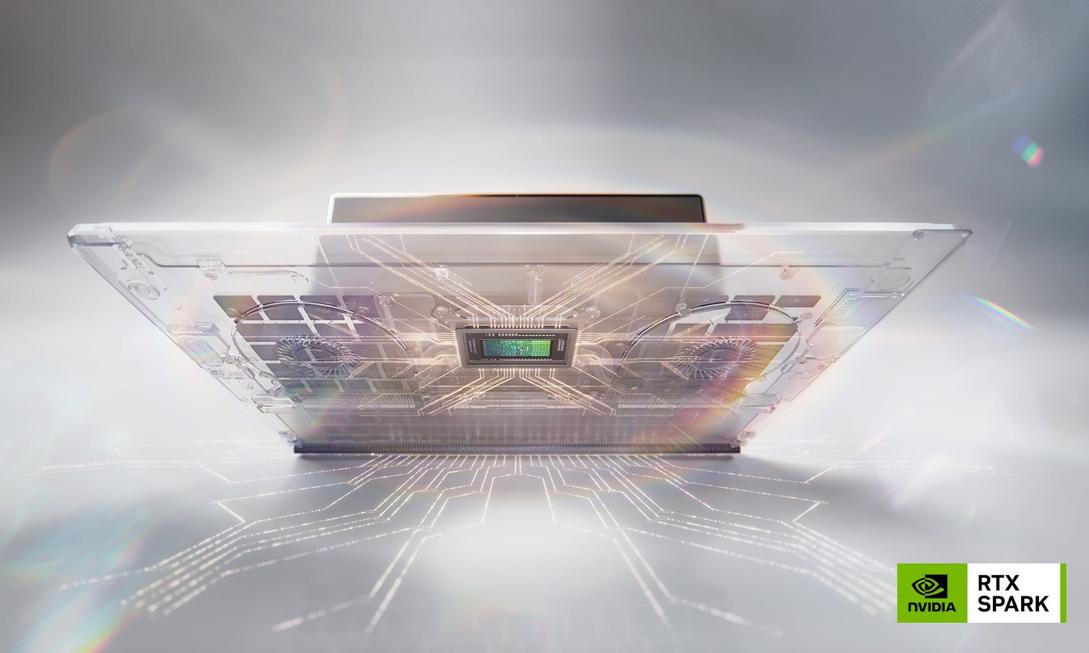
Every time you want to run heavy AI applications on your computer, you’re tormented by cloud-stalled progress bars, privacy leak concerns, or bottomless monthly subscription fees? The “AI PC” concept has been hyped for three years, but most users’ real experience is at best just an extra Copilot button. Once you try to run models offline, it immediately throttles and overheats. Until Computex 2026, NVIDIA finally dropped a truly competitive answer—RTX Spark. It doesn’t play word games with you, directly stuffing server-grade AI computing power into a thin and light laptop, solving all anxieties about AI landing at once.
Why Have Past “AI PCs” Always Felt Like Empty Promises?
Honestly, everyone’s fed up with hardware manufacturers hyping NPU specs with dozens of TOPS on spec sheets, without ever clarifying that regular users don’t care what NPU stands for. Trust in AI PCs has remained low because the experience is essentially just “a computer that connects to the internet faster.” NVIDIA RTX Spark’s smartest move is not beating around the bush—it leverages NVIDIA’s deep credibility in AI to transform the experience from “waiting online, tied to subscriptions” to “local instant, free execution.” What people care about isn’t hardware terms, but whether this computer can truly get the job done.
1 Petaflop Computing Power Burst, Laptops Can Now Run 120B Large Models

This RTX Spark Superchip adopts an innovative Blackwell RTX GPU architecture, paired with a 20-core Grace CPU and an extravagant 128GB unified memory, pushing overall AI computing power directly to 1 petaflop (equivalent to 1,000 TOPS, 20 times stronger than past NPUs)! What does this mean? You can smoothly run 120 billion parameter large language models directly on your computer, supporting up to 1 million tokens context windows. Giant inferences that previously required a full data center server room are now perfectly integrated into slim laptops and mini desktops.
👉 See how NVIDIA redefines AI laptops:
https://www.youtube.com/watch?v=H4nJo-oqAro
From Clicking to Asking, Your Personal AI Butler Finally Arrives
Jensen Huang’s words perfectly capture RTX Spark’s ambition: “For forty years we’ve been clicking the mouse to open apps; but with RTX Spark, you just speak, and the computer does it itself.”
Through the NVIDIA OpenShell framework co-developed with Microsoft, AI Agents can finally operate autonomously, safely, and privately on your main device. More importantly, you can precisely set what the AI can see and what it cannot touch, returning full privacy control to you. And this isn’t just a toy for hardware enthusiasts—Adobe is rebuilding Photoshop and Premiere from the ground up for RTX Spark, and Blackmagic Design, OTOY, ComfyUI, and even Xbox have announced full support. First-batch products from tier-one manufacturers like ASUS, Lenovo, Dell, and Microsoft Surface will also hit shelves this fall.
Who Is This “Real AI PC” Best Suited For?
- Privacy-conscious professionals: Keep confidential data and client files processed locally, completely cutting off the possibility of cloud capture or leaks.
- Heavy AI creators and developers: Need to call large models offline anytime, anywhere, generate high-quality audio-visual materials, and don’t want to rely on cloud computing power.
- Extreme all-round players: Want both 1440p ray-tracing at 100 FPS gaming experience and the ability to handle complex local AI Agents—a dual-purpose god machine.
The launch of RTX Spark has completely drawn the line between “gimmick AI stickers” and “real capability.” It’s not just hardware; it’s the key to opening the “local AI era,” delivering privacy, speed, and zero subscription fees all at once. If you’re tired of being limited by the cloud and crave a computer that truly understands commands and shares your workload, the RTX Spark laptop series launching this fall is definitely your strongest reason to upgrade. Stop waiting—put AI supercomputing power right in your backpack!
