
At 8:30 AM, nurse Ms. Lin just took over three patients. She needs to constantly switch between the medical record system, nursing records, and schedules. Apps on her phone and tablet are opened and closed repeatedly, and just searching for information takes nearly half an hour. This isn’t an isolated case—whether store clerks, field technicians, or frontline medical workers, “switching tools” has long become the most mentally draining part of daily work.
We’ve been looking for a solution: Can we avoid opening so many programs and just be told what to do?
Microsoft’s Project Solara, announced at Build 2026, is a direct response to this pain point. It’s not just selling you a piece of hardware, but aims to completely rewrite how we interact with software.
It’s Not About the Badge Replacing the Computer, But AI Agents Redefining Workflows
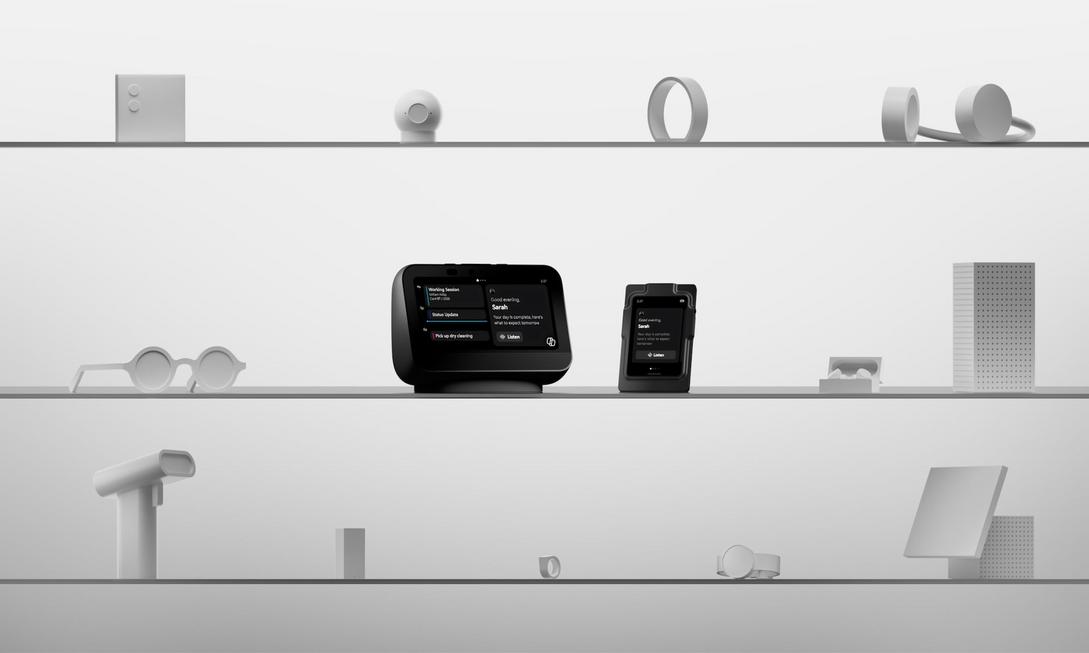
Everyone’s attention is drawn to the smart badge that can be clipped on a lanyard and the companion device on the desktop at first glance of Project Solara. But if you read the full announcement carefully, you’ll discover a surprising fact: the hardware is almost just a supporting role.

What Microsoft is truly describing is a “post-App era” computing model. For the past forty years, our workflow has hardly changed: Open App → Operate Interface → Complete Task → Close → Open the Next. Smartphones have just put this process in our pockets without fundamentally changing it.
Project Solara aims to flip this. You don’t need to open Outlook, Teams, Word, Excel and organize data yourself; instead, directly tell the AI Agent what you need, and it will automatically coordinate tools, integrate information, and finally present the output for your review. Simply put, it changes from “you operate the software” to “you call the intelligence.”
Just-in-Time Interface Generation: No Need to Rewrite Programs for Every Device
The most astonishing technical concept of Project Solara is “Just-in-time UI.”
Traditionally, every new hardware requires a brand-new software stack. Smaller screen? Redesign the UI. Different device shape? Develop a new SDK and re-adapt. This is also why most new device categories burn money like water but ultimately fail.

The solution of Just-in-time UI is: Let AI automatically generate or adapt interfaces based on the device. The same Agent can display a simple card on a small badge, interact via voice through a speaker, or present a full dashboard on a connected screen—developers don’t need to write a set of code for each of these three experiences.
This is not just a technical innovation, but a key factor in directly lowering the barrier for device development. When interfaces can automatically adjust according to context, the cost for enterprises to adopt AI wearable devices can be greatly reduced. This is why this project has a better chance of success than past AI hardware (like Humane AI Pin or Rabbit R1).
Why Enterprises Might Really Buy In This Time
In 2025, 85% of AI hardware startups declared failure, for similar reasons: cool ideas, unclear uses, weak ecosystems, and quickly forgotten. Project Solara aims to break this cycle with three things:
- Platform Thinking, Not a Single Product: The badge and desktop device are just reference designs; the real hardware will be custom-made by various OEMs for different industries and work scenarios
- Complete Software Ecosystem: Directly integrates with Microsoft 365 Copilot, Teams, Outlook, and Azure; the data foundation of hundreds of millions of users is already there, no need to start from scratch
- Prioritizing the Enterprise Market: Private pilot programs already include large enterprises like AccuWeather, Best Buy, CVS Health, Levi’s, Target. Medical staff don’t need to swipe their phones during rounds, store employees don’t need to check inventory while answering customer questions—these are real pain points

When your AI badge can understand your work context through WorkIQ and directly push the most needed information at the moment, this is no longer an optional gadget—it is a lever for productivity.
Who Is Project Solara Best Suited For?
- Frontline medical staff who need to handle multiple systems simultaneously
- Store clerks and inventory managers running around the sales floor
- Field technicians and on-site service engineers
- Any worker who “doesn’t want to constantly switch between apps, just wants to get things done”
Project Solara may not necessarily be mass-produced in the form announced at Build 2026, and the implementation challenges of Just-in-time UI still need verification. But Microsoft has clearly outlined a path from an “App-centric” to an “agent-centric” approach. If you’re tired of jumping between seven or eight programs every day and feel that most of your work time is spent “managing tools” rather than “getting things done,” this system might be the solution you’ve been waiting for.
