
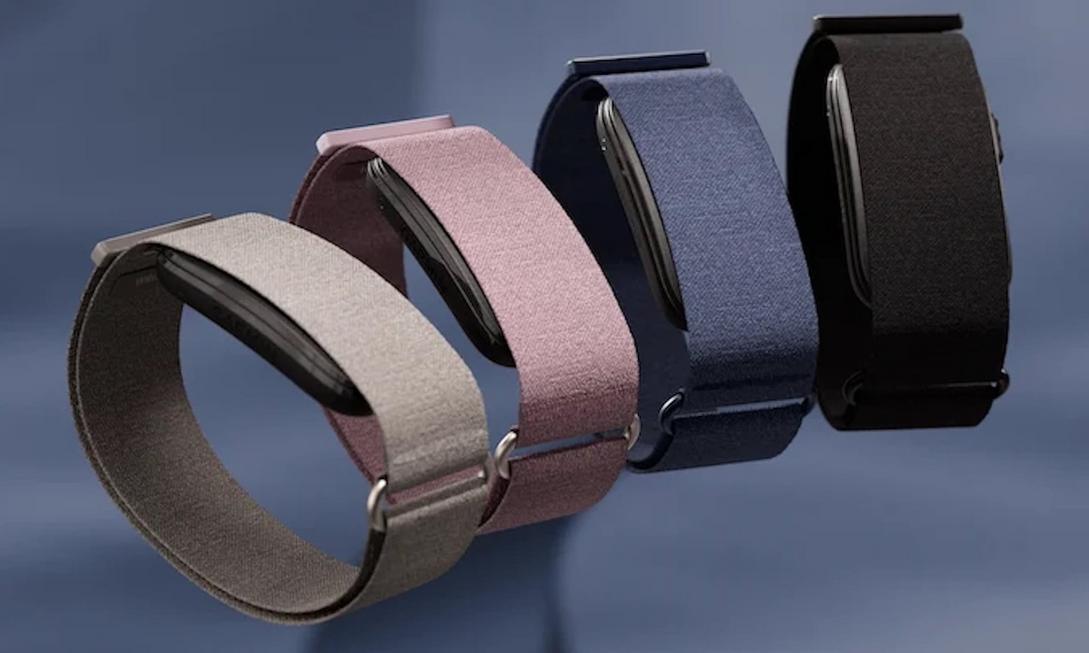
Imagine when you’re grinding under the squat rack or enjoying your alone time during a morning run, but the smartwatch on your wrist suddenly lights up with an irrelevant work email or social notification. Your focus is instantly interrupted. That’s why in 2026, the screenless fitness tracker has become the new favorite in the fitness community.
This year, Garmin and Google launched the CIRQA and Fitbit Air respectively. Both devices tout the “zero screen, zero distraction” slogan, but their underlying logic is completely different. Which one is the best training buddy for your workout? We directly pit these two popular new products against each other for a comprehensive in-depth showdown.
Pure Design: Side Physical Buttons vs Extreme Minimalism with No Buttons

After removing the screen, both return to the essence of a “wristband,” but their operation logic is worlds apart. The Garmin CIRQA retains the classic side physical buttons. Don’t underestimate this design; in the gym with sweaty hands or after swimming, the tactile feedback of physical buttons is far more precise and reliable than blind presses or gesture operations. One button to start, one button to stop—clean and efficient.
In contrast, the Fitbit Air goes for extreme minimalism, with no buttons on the body, relying entirely on built-in sensors to recognize movements or phone app operations. This design makes it feel more like a fashion accessory when worn, and although it’s extremely lightweight (only 12 grams), it also means you lose the intuitive response for quick control of the band. Sometimes, automatic detection can fail during weight training or swimming.
Data Depth: Professional Coach vs AI Helpful Reminders

This is the real dividing line between the two. If you open the phone app to analyze data like a race car driver, the CIRQA will amaze you. It not only supports over 80 sports modes but also brings Garmin’s signature Body Battery and Training Readiness features to the wristband. Combining metrics like VO2 Max and recovery time, it can precisely tell you whether to “go for it” or “take a rest” today.
The Fitbit Air takes a more approachable route. Its heart rate variability (HRV) and sleep analysis perform well, paired with Google Health’s AI coach, offering simple and easy-to-understand suggestions like “You didn’t sleep well last night, today is suitable for light yoga.” It doesn’t teach you how to break limits, but ensures you don’t stray from the path of health.
Want to see actual operations and comparisons? Here’s an in-depth hands-on review video for both products:
Battery Life and Wearability: Is Charging Once a Week the Baseline?

Since it’s a screenless band, battery life is a key metric. The Garmin CIRQA claims 10 days of battery life, and in actual testing, even with all-day monitoring enabled, it can last through an entire training week, including Sunday’s long run, and the charging interface is compatible with Garmin watches.
The Fitbit Air officially states 7 days. Although independent testing agencies found it still had 16% power after a week, with fast charging advantages (5 minutes of charge enough for one day), for those who hate frequent charging, the extra 3 days from the CIRQA mean fewer interruptions and more complete continuous sleep data tracking.

Both excel in wear comfort, making you almost forget they’re there during sleep. But due to the longer charging cycle of the CIRQA, you’ll have fewer nights without the device on your wrist.
Price Trap: Buyout Model vs Subscription Model
Finally, let’s talk about the money. The Garmin CIRQA is priced at $199.99, although the entry price is higher, its core data features are completely subscription-free. You pay once, and your future training data is in your hands, without worrying about monthly fees.
The Fitbit Air is only $99.99, which seems very value-for-money, and even comes with a 3-month Premium trial. However, note that after 3 months, to access more in-depth sleep insights or use the AI coach, you’ll need to pay a monthly fee. If your budget allows and you don’t want to be charged every month, the CIRQA’s “buyout model” is actually more cost-effective and reassuring over a 2-3 year usage period.
Conclusion: Who Should Buy Which?
In summary, this screenless fitness tracker showdown has no absolute loser, only what’s suitable for you:
- Choose Garmin CIRQA: If you’re a serious trainer, hate subscription fees, need precise training data, or are already a loyal fan of the Garmin ecosystem.
- Choose Fitbit Air: If you’re a fitness beginner wanting AI to remind you to move, have a limited budget, and prefer a low entry barrier.
Exercise shouldn’t be hijacked by a screen, and your health data shouldn’t be held hostage by monthly fees. Choose your screenless training buddy now, return your focus to the exercise itself, and you’ll find that the data your body gives back to you is more exciting than any screen!
