
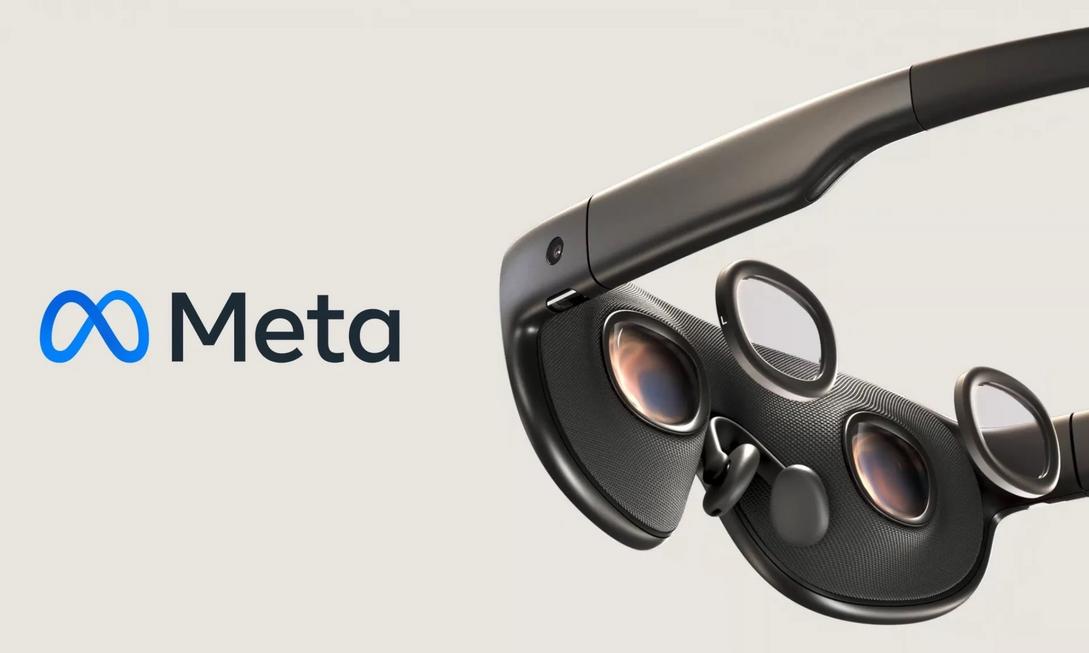
Have you ever experienced this kind of meltdown: excitedly putting on a VR headset ready to enter the virtual world, only to have your cheeks hurt from the thick sponge padding in less than 10 minutes, and your forehead breaking out in a layer of sweat? For most people, traditional VR devices feel like an “endurance test” rather than enjoyment. But recently, Project Phoenix, accidentally leaked from Meta’s official Horizon OS app, might just be the answer we’ve been waiting for. It completely abandons the bulky strap design and looks just like a stylish pair of sunglasses, announcing that “lightweight AR glasses” have finally arrived in real form.
Finally no more battling the “cheekbones”!
Project Phoenix’s most impressive feature is that it completely bids farewell to the fully enclosed design of traditional VR headsets. Instead, it features two delicate nose pads, just like ordinary glasses that rest effortlessly on the bridge of your nose.

This is not just a change in appearance, but a complete reversal of the wearing experience. Without the heavy sponge sealing pads, your peripheral vision is completely open, without the oppressive feeling of being “stuffed into a box.” Whether walking on the street, sitting in a cafe, or simply lying on the couch replying to messages, it seamlessly integrates into daily life, making it unobtrusive to wear anytime, anywhere.
90-degree field of view a step back? Lightweight is king
When news of the 90-degree field of view (FOV) broke, many players accustomed to the wide view of Quest 3 indeed frowned. But don’t be disappointed just yet; this is actually Meta’s thoughtful “golden compromise.” The Micro-OLED display panels sit directly close to the eyes, combined with the lightweight frame structure, making the entire pair of glasses approach the weight of regular sunglasses. Sacrificing a bit of peripheral vision in exchange for the reason you’d want to wear it on your face all day. The 90-degree FOV is actually comparable to the original Quest 2 and Rift S, sufficient to provide an immersive big-screen experience while significantly reducing motion sickness and visual fatigue.
The computing core in your pocket, returning the weight to your pants pocket
If you look closely at the left temple in the renderings, you’ll see a thin wire extending backward, disappearing behind the ear and connecting to a compute module (Compute Puck) in your pocket. This is Project Phoenix’s ultimate killer feature: compute separation.
- Zero burden on the face: Moving all power-hungry, heat-generating, and heavy processors and batteries to the pocket, leaving only the lightest display and sensor components on the face.
- Endurance and performance upgrade: The pocket main unit provides much larger battery capacity and cooling space than head-worn devices, so you don’t have to worry about running out of power mid-game or the device getting hot against your cheeks.
- 10-sensor array: Cameras and multiple sensor groups are configured on both sides of the frame, supporting passthrough video, spatial tracking, and eye tracking, hiding a powerful interaction core beneath the slim exterior.
Not just an entertainment accessory, but an all-day “second pair of eyes”
Meta clearly didn’t intend to treat Project Phoenix as a toy to occasionally take out and play with. The official app even includes a prescription lens pairing feature in collaboration with Zenni, clearly signaling that Meta hopes this device can become your daily replacement for nearsighted glasses. Whether you’re a commuter who needs a big screen for binge-watching on the go, or a tech enthusiast seeking seamless wear with instant access to an AI assistant, this “put it on and never want to take it off” design philosophy will definitely hit your pain points.
Meta Project Phoenix uses a clever trade-off to break the stereotype that “immersive experience = bulky headset.” The pocket compute module combined with the glasses-like lightweight nose pad design finally allows AR/VR devices to step out of the living room and into our everyday wardrobe. If you’re tired of the dizziness and pressure from wearing VR headsets, or crave a lightweight device that can be worn all day, seamlessly switching between reality and virtual, Project Phoenix is definitely worth keeping an eye on. Ready to toss the heavy main unit into your pocket and let lightweight tech redefine your vision?
