
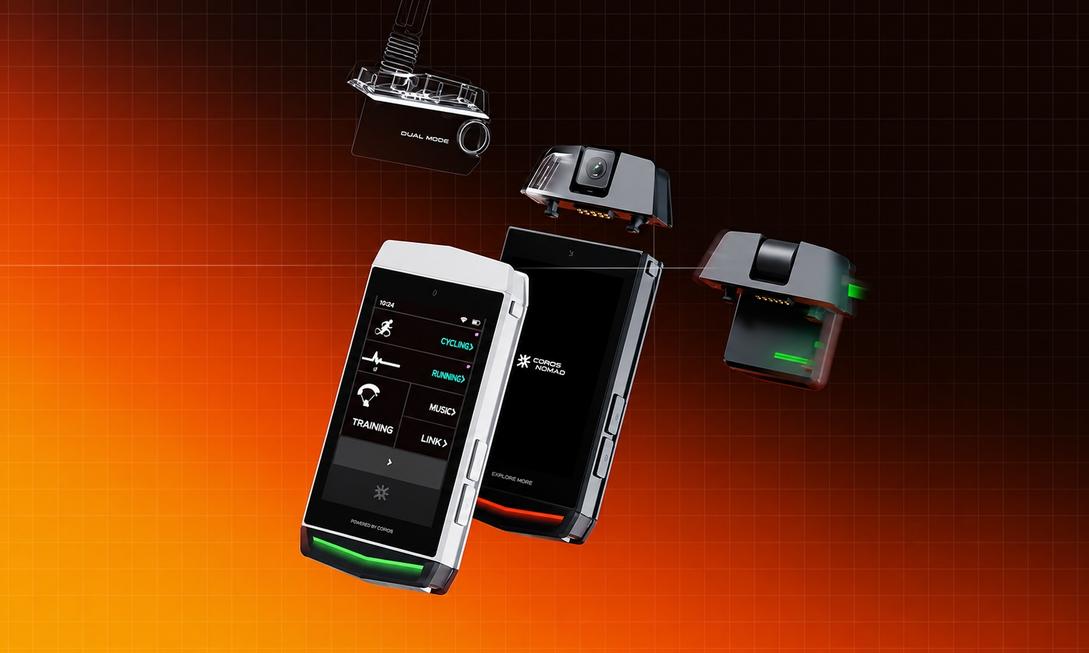
Weekend cycling to break the wind, midweek jumping on a kayak to break waves, occasionally wanting to head to the mountaintop for some paragliding? In the past, these hobbies meant tying a Garmin to your handlebars, wearing a Coros on your wrist, and clipping a phone by the boat. Equipment stuffed in your backpack, data scattered across different apps, switching sports feels like sorting through electronic waste. If you’re also tired of buying gear for different activities, REACH’s “modular GPS computer” might just be the ultimate solution to break the deadlock.

Hardware Modular Revolution: Switching Sports Gear Like Changing Lenses
Unlike traditional sports computers that only switch modes in software menus, REACH bakes “modularity” directly into its hardware DNA. The main unit is just the beginning; what’s truly impressive are the functional modules that “click” into place. Need rear radar alerts for morning cycling? Snap on the Radar MOD; afternoon team rowing needs real-time communication? The Walkie MOD offers about 3 km talk distance; on windy paragliding launch days, the Wind Meter MOD turns into a precision anemometer.

What’s most reassuring about REACH is its open-source 12-pin connector design. All engineering diagrams and pin data are publicly available, meaning it’s not a closed ecosystem but an open platform that can expand infinitely with your needs. In the future, no matter what special sensors you want to make, you can develop them freely.

Precise Data Cross-Domain Synchronization: From Kayak Paddling to Bike Pedaling
For data-driven athletes, REACH’s hardware specs are uncompromising and perfectly suited for various high-intensity scenarios:
- Kayaking/Canoeing: Equipped with a 10Hz multi-satellite positioning system, updating ten times per second, precisely capturing speed changes with every paddle stroke. Paired with IMU heading stabilization technology, it helps teams reduce physical effort in course corrections, keeping lines straighter.
- Cycling: Built-in 9-axis IMU and precision barometer can directly simulate pedaling power and cadence. This means no need to buy additional crank sensors, one less component to install, one less charge to manage.
- Paragliding: Directly displays precise vertical speed (Vario), thermal indicators, and terrain wind adjustments—high-end specs usually found only on professional flight computers.


Thoughtful Details and Ultra-Long Battery Life: The Data Savior for Coaches and Athletes
Team training dreads equipment changes that cause historical data gaps. REACH’s “Legacy Mode” is a clever design that perfectly aligns new data with the team’s existing baseline data. Coaches don’t need to rebuild reference standards from scratch and can switch to high-precision mode when athletes are ready.
On the hardware body, the 3.5-inch 640×960 Blanview sunlight-readable touchscreen weighs only 156 grams and has IPX7 waterproof rating. 26-hour ultra-long battery life with USB-C direct charging, 24GB built-in storage lets you train long distances worry-free. Coolest of all is the programmable ambient LED ring that emits steady green light when your pace or heart rate is in the target zone, automatically changing color when deviating, allowing you to intuitively monitor status without looking down at the screen during sprints. Paired with the Insight Link App supporting .FIT, .GPX, .CSV export and direct Strava connection, data migration has zero barriers.


From early morning road racing to afternoon lake rowing, REACH is no longer just a single-sport recorder but an open platform that evolves with you. For triathletes, multi-sport enthusiasts, or coaches needing unified data formats, this isn’t just saving budget on multiple devices—it’s freeing you to explore new sports. Now on Kickstarter early bird price $359 (original $599), it’s the best time to redefine your training limits with one device.
